Insights
The Curious Investor - Q2 2026 review
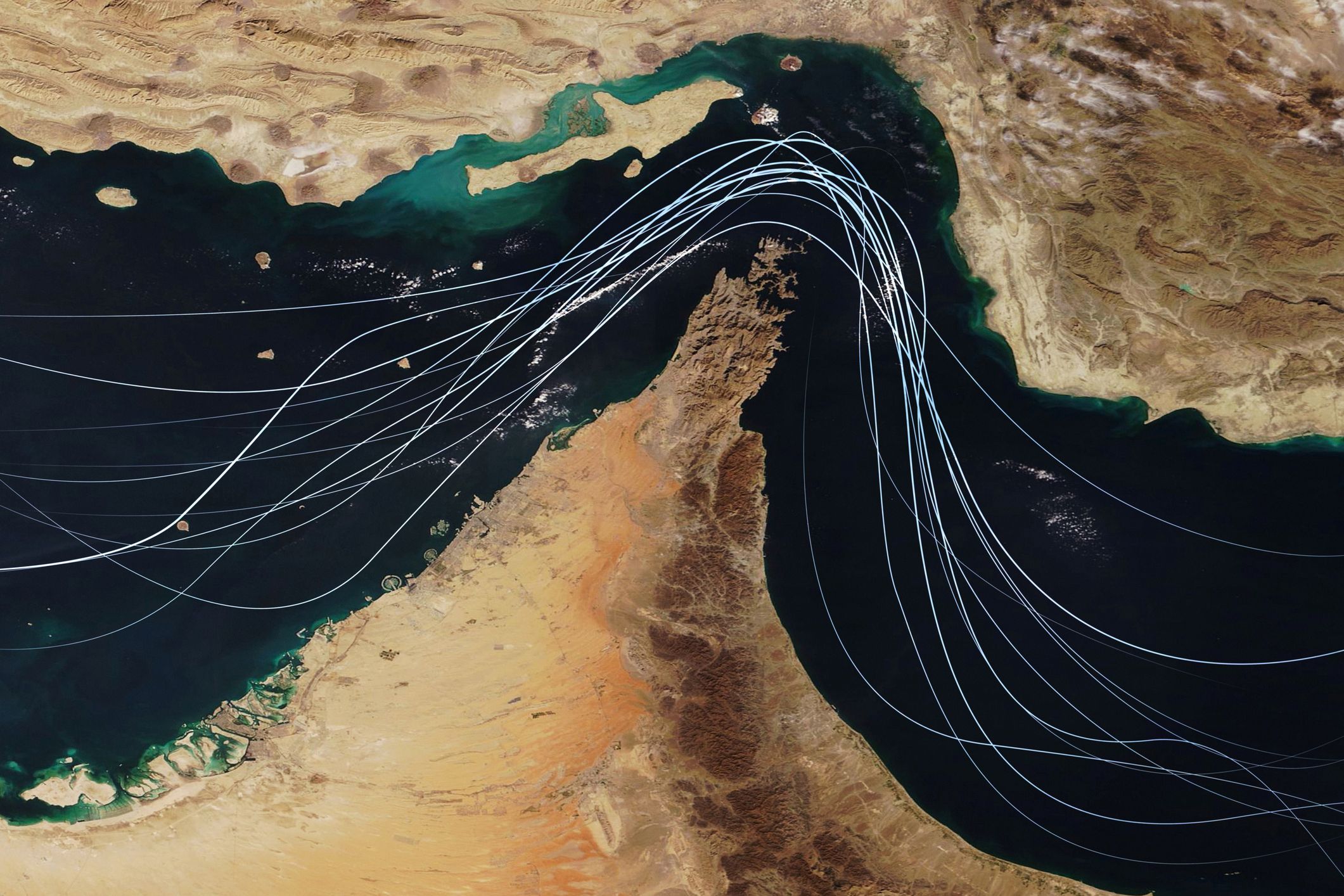
A war nobody expected has become a peace nobody quite trusts.
References to specific companies, securities, sectors or investment themes in this commentary are illustrative only and are not investment recommendations. The views expressed are the opinions of Dowgate Wealth Ltd as at the date of publication.
—-
At the end of Q1, we said the overriding variable in the market outlook was Iran. Three months on, whether the Strait of Hormuz stays open remains far from clear. A war nobody expected has become a peace nobody quite trusts, and that uncertainty has been the defining feature of the second quarter.
Energy: The Round Trip
Our thesis from the start of the year — that oil was cheap in real terms and that most global investors were underweight the sector — still largely holds, in our view. While we didn’t expect war with Iran, the supply issues we flagged played out in full, driving Brent crude briefly to $120. What surprised many, ourselves included, was the speed with which the price round-tripped to prewar levels by late June, as tankers began to exit the Strait of Hormuz and a 60-day truce raised hopes of normalisation. Even so, we do not expect oil supply lines to revert fully to prewar norms, and we believe this could create opportunities in new areas of oil and gas exploration, production and transportation — though these views remain subject to geopolitical developments.
AI & Robotics: The Disruption Trade
We reported in Q1 that the AI trade had shifted from “who benefits” to “what gets disrupted”, and Q2 confirmed the software sector as the primary casualty. Forward multiples across enterprise software companies fell as the seat-based subscription model came under direct threat from agentic AI. Meanwhile, the “picks-and-shovels” theme for AI and robotics became Q2’s most dominant global equity trade, playing out most spectacularly among the memory-chip makers, with Samsung and, more recently, SK Hynix and Micron being prime beneficiaries. As with all rapidly developing technologies, sentiment and valuations here can swing sharply in both directions.
Space: IPO Lift-Off
We identified the space economy as a key theme and flagged the SpaceX IPO as its most consequential event. It did not disappoint, delivering a public-market valuation with the inevitable Musk hype and hyperbole attached. Beyond the headlines, we believe the strategic logic remains intact, with Starlink strategically vital. However, in our view its immediate capital requirements lean more towards the competitive space of AI computing than satellites and rocket launches — and the narrative risks outpacing execution.
The Fed: New Chair, New Agenda
Kevin Warsh navigated his first meeting as Fed Chair without a rate change, but signalled a shift towards a more neutral stance, citing a wait-and-see approach to energy prices while his proposed institutional reforms take shape. In our opinion, his push for new target measures and data sources risks obscuring the Fed’s core mandate to moderate inflation. Warsh has previously criticised the Fed for enabling the Treasury’s borrowing appetite — an appetite we suspect the White House will increasingly want accommodated. Six weeks in, the President has so far given him room to get on with the job. Whether that continues is one of the more interesting questions for the second half.
The Great Rotation: On Pause
The broad rotation out of dollar-denominated assets halted in early March, as the dollar’s safe-haven appeal reasserted itself after the Iran shock. In our view, any meaningful resumption will require sustained de-escalation in the Middle East, which for now remains on hold.
The Chinese Consumer: Still Waiting
In January, we argued for a recovery in China’s domestic consumption. Instead, policy conditions tightened, allowing China’s oil import rate to fall sharply. Retail sales decelerated in April and then dropped 0.6% in May, the first decline in three years. A consumer stimulus is possible, but when pressure mounts, for now at least, China appears to favour its export-led manufacturing sectors over its consumers.
The UK: A Tale of Two Indices
In the UK, the FTSE 100 recorded its sixth consecutive quarterly gain, its best run since 2022, led by aerospace and defence, banks, and miners. This is, of course, an international index; with roughly three-quarters of FTSE 100 revenue earned abroad, it is not really a direct play on the UK itself. The domestically focused FTSE 250 tells a different story, drifting lower as growth remains broadly flat and the Bank of England looks set, in our view, to hold rates against stubborn inflation and yet another round of political change and policy uncertainty.
Healthcare: Quietly Winning
Healthcare continues to deliver the least drama and, increasingly, some of the best returns. After a soft start to the year, large-cap pharma has outperformed the broader market over the past three months. Policy fears have faded, and FDA approval momentum is building. Encouragingly, biotech M&A enjoyed its strongest run since before the pandemic. Our suggestion that Big Pharma might outperform Big Tech this year looks stronger to us than it did in January — though, as ever, future performance is uncertain.
Bonds & Japan: The Long End Under Pressure
Japan’s bond and currency troubles persist. The 10-year JGB yield sits at multi-decade highs, and the yen at a four-decade low, as the world’s largest creditor tightens policy against a fragile global backdrop — a risk vector further strained by rising oil prices. Costly local-currency interventions have so far held the line against the dollar, but we believe a more coordinated intervention may increasingly be required.
Private Credit: Phase One
In private credit, several major vehicles restricted redemptions, as the AI derating of software has left private equity firms holding a glut of stranded 2021/22-vintage investments they cannot exit. In our view this remains a liquidity event rather than a systemic credit event, but no-smoke-without-fire concerns persist and warrant continued monitoring.
Q3 Prospects
Halfway through 2026, we can take some comfort in our thematic calls. The S&P 500 fell around 9% from its February peak to its low on 30 March 2026, then staged a powerful, tech-driven recovery to a fresh all-time high on 2 June 2026 before a late-quarter wobble (source: Bloomberg, data as at 30 June 2026). In summary:
- Energy — thesis reconfirmed, though the oil-price round trip is a valuable reminder of energy’s cyclicality.
- Physical AI and robotics — the pick-and-shovel play is in full swing as software incumbents are disrupted.
- Space economy — lift-off achieved; in our view the narrative risks outpacing execution.
- The Fed — new Chair, neutral hold; credibility bought time, not resolution, in our opinion.
- The great rotation — masked by the risk premium; we would watch for it to re-accelerate on any durable Gulf de-escalation.
- The Chinese consumer — remains constrained by manufacturing priorities and pressured by higher oil prices.
- UK equities — the global-facing FTSE 100 outperformed the domestic FTSE 250 over the quarter (source: LSEG, Q2 2026).
- Healthcare — quietly compounding.
- Bonds — Japan remains, in our view, the pressure gauge for the global long end.
- Private credit — a liquidity squeeze that we believe could yet morph into something more serious, and bears monitoring.
In Closing
Most of our themes have been confirmed; a few, like the Chinese consumer, have not. The value of a framework is not that it is never wrong, but that it guides you where to look when things change. We remain ever curious and continue to seek the opportunities that volatility invariably creates. As always, investors should consider their own objectives and risk tolerance before making investment decisions.
—–
IMPORTANT INFORMATION
This document has been prepared by Dowgate Wealth Ltd for information purposes only. It is a marketing communication and does not constitute investment advice, a personal recommendation, or an offer to buy or sell any investment. It does not take account of any recipient’s individual objectives, circumstances or needs; you should consider whether any investment is appropriate for you and, where appropriate, seek independent professional advice.
The views expressed are those of Dowgate Wealth Ltd at the date of publication, are subject to change without notice, and should not be relied upon as a guarantee of future events. Any forward-looking statements, forecasts or estimates are based on current assumptions, are subject to known and unknown risks, and are not reliable indicators of future performance. References to specific companies, securities, sectors or themes are illustrative only and are not recommendations.
Information has been obtained from sources believed reliable, but Dowgate Wealth Ltd does not guarantee its accuracy or completeness and accepts no liability for loss arising from reliance upon it, except where liability cannot be excluded under applicable law.
The value of investments and the income from them can fall as well as rise, and you may get back less than you invested. Your capital is at risk. Past performance is not a reliable indicator of future performance. Tax treatment depends on individual circumstances and may change. Certain strategies and asset classes carry higher risk: short selling can produce unlimited losses, and commodities (including gold and silver) and digital assets such as Bitcoin can be highly volatile and result in substantial losses.
Dowgate Wealth Ltd, registered in England number 12221221, is authorised and regulated by the Financial Conduct Authority and is a member of the London Stock Exchange. Registered address: 15 Fetter Lane, London, EC4A 1BW.
Written by
Jeremy McKeown Market Strategist